

EMPTY THE EMOTIONAL DUSTBIN BEFORE ENTERING THE CLASSROOM
By Manjot Kaur
As a teacher, I have often reflected on a simple question: Why do good teachers sometimes behave in ways they later regret? After talking to many teachers and reflecting on their experiences, I found the answer. The answer is often not found inside the classroom but in everything that happens before entering it.
Imagine a typical morning. The alarm fails to wake you on time. You rush out of bed. Breakfast is not ready. Lunch remains unpacked. In the hurry, something important is forgotten at home. You miss the metro by a few seconds and watch the doors close in front of you. The next train is crowded. By the time you reach school, you are already mentally exhausted. You mark your attendance late. The Head needs an explanation for your being late, and a warning is issued too. All your previous mistakes are highlighted, while all your accomplishments to date are ignored. Then comes another setback. A pending report is questioned. A senior expresses dissatisfaction. A colleague's comment irritates you. A parent sends a complaint. Slowly, frustration, disappointment, anger, guilt, and stress begin piling up inside you like garbage in a dustbin.
Now comes the real problem. Imagine carrying that overflowing dustbin straight into the classroom.
The class looks the same, the situations are the same, and the students are the same as they were yesterday. One child has forgotten homework. Another is talking to a friend. Someone is not paying attention. A student asks a question that has already been explained twice. These are normal classroom situations. Yet today they feel unbearable. Your voice becomes louder. Your patience becomes shorter. Small mistakes appear like major offences. You are not the same teacher today. Students notice you, and your behaviour towards them is not acceptable today. Something has changed.
What changed?
Students? No, not the students.
School? No, not the school.
Staff? No, not the staff.
Then what?
What has changed then? Definitely not you alone, but your situation.
Contemporary research on teacher agency helps us understand this. Ashraf (2015), drawing on Barad's concept of agential realism (2007), argues that a teacher's actions do not emerge solely from individual personality or intention. Rather, they are shaped by continuous interactions between the teacher and the surrounding social, institutional, and material conditions. As Barad explains, "Within an agential realist understanding, the locus of agency and power are not situated within an individual but are instead distributed between human and nonhuman phenomena that do not pre-exist their intra-actions."
In simple words, teachers do not enter the classroom as isolated individuals. They carry with them the experiences of the morning—the delayed metro, the warning from the Head, the unfinished report, the colleague's remark, the parent's complaint, and countless other interactions that quietly shape their emotional state. The classroom may remain exactly the same, but the teacher's experience of that classroom has changed. Drawing from agential realism, what we see is that the mind has changed. The positive energies of the morning have gradually been replaced by frustration, stress, disappointment, and negative thoughts. The emotional garbage has quietly filled your mind until it becomes like a dustbin.
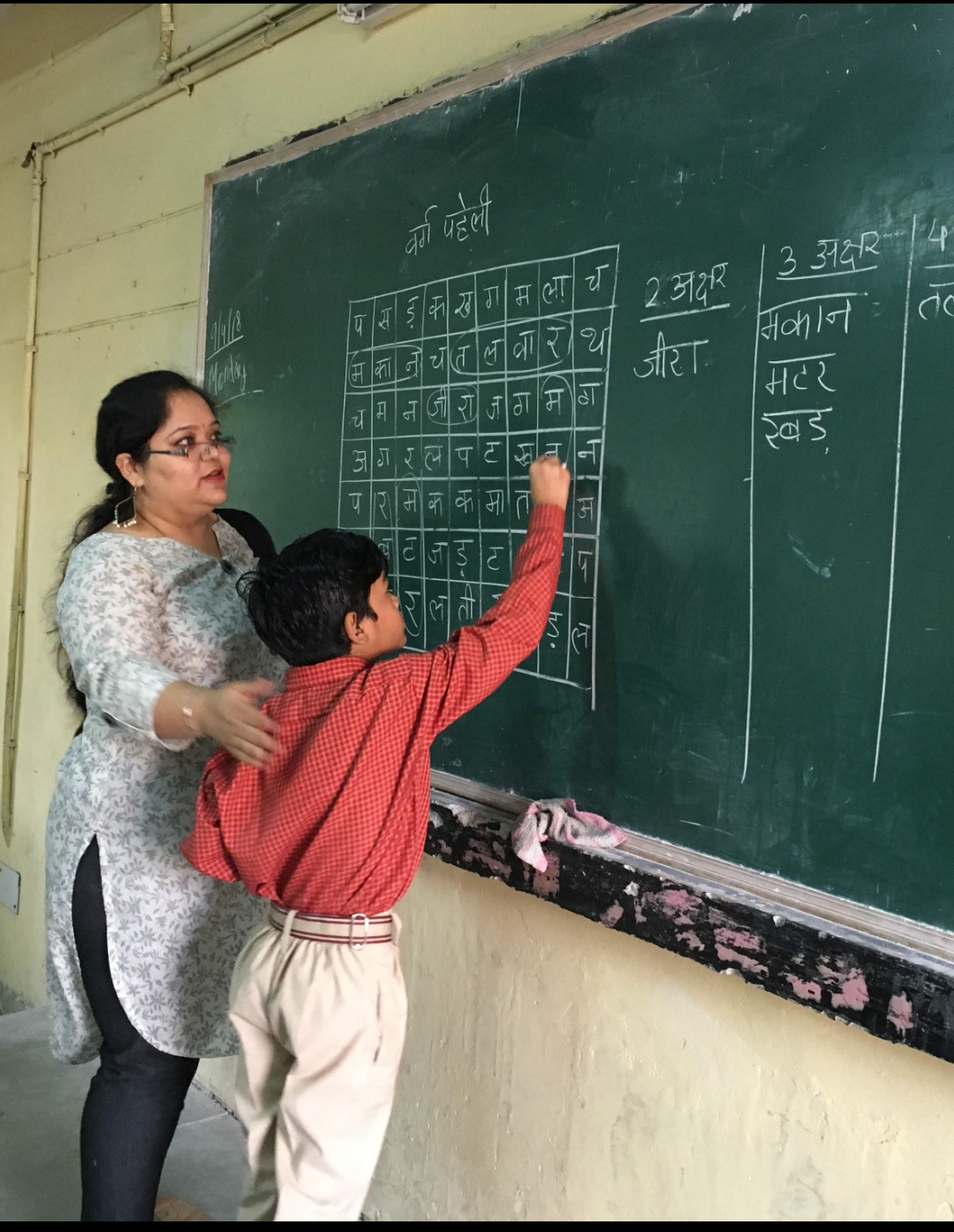
The problem, therefore, is not that the teacher has suddenly become a bad teacher. The problem is that the emotional dustbin has entered the classroom.
The emotional garbage collected throughout the morning, which found no healthy way to be released, has finally found an outlet. Unfortunately, innocent students become the recipients of emotions they never created. The saddest part is that students rarely understand what is happening. A small mistake by a child may invite harsh words, irritation, or unnecessary punishment. The frustration collected throughout the morning is then dumped into the classroom, making innocent students suffer for problems they did not create. They only see a teacher who seems angry, distant, or impatient. A sensitive child may spend the whole day wondering, "What did I do wrong?" Another may stop asking questions for fear of being scolded. A normally cheerful classroom suddenly becomes silent and tense.
Students are like emotional sponges. Neuroscience explains this through mirror neurons. They absorb not only knowledge but also moods, attitudes, and energy. While a frustrated teacher can fill a classroom with anxiety, a calm teacher can fill it with confidence. Sadly, today you are not that calm teacher. A classroom should be a place of learning, encouragement, and emotional safety. When teachers transfer their stress to students, it affects their confidence, motivation, and trust.
This is why emotional hygiene is as important for teachers as lesson planning.
Just as we would never carry a bag of garbage into a classroom and throw it on the floor, we should not carry emotional garbage and throw it on our students. Students are not dustbins for our frustration. They deserve patience, understanding, and a positive learning environment. A calm teacher creates calm minds, and a happy classroom nurtures happy learners.
So, how can teachers empty this dustbin?
The first step is awareness. Before entering the classroom, ask yourself, "What am I really upset about?" Often, the answer has nothing to do with students.
The second step is creating a pause. Take a few deep breaths. Drink water slowly. Walk around the corridor for a minute. Offer a silent prayer. Listen to a favourite song. Some teachers write their worries on a piece of paper and mentally leave them outside the classroom door.
The third step is perspective. Remind yourself that students are not obstacles in your day; they are the purpose of your day. The child who is talking may simply be excited. The one who forgot homework may be struggling at home. The student asking repeated questions may genuinely be trying to understand.
Finally, learn to refill your emotional tank. Rest adequately. Spend time with family. Read, exercise, laugh, and connect with supportive colleagues. A teacher who is emotionally nourished is less likely to emotionally overflow.
Teaching is not merely a profession; it is a daily human interaction with young minds and tender hearts. Students may forget many lessons we teach, but they rarely forget how we made them feel. Therefore, before entering the classroom each morning, let us ask ourselves one question:
"Am I carrying knowledge into the classroom, or am I carrying garbage?"
Our students deserve our guidance, our patience, and our best selves—not the frustration collected from a difficult morning. They deserve a teacher who is emotionally present, not emotionally burdened. Perhaps the greatest lesson we can teach is not found in any textbook. It is the lesson of emotional responsibility. Every morning gives us a choice: to carry yesterday's burdens into today's classroom, or to leave them at the door and meet our students with patience, hope, and kindness. When teachers learn to empty their emotional dustbins before entering the classroom, they create more than better lessons. They create emotionally safe classrooms, stronger relationships, happier schools, and healthier young minds. And perhaps, in doing so, they also become happier teachers themselves.
- Log in to post comments